
Engineering notes from the field.
Essays and field notes on AI, software engineering, design, and the craft of building product teams that ship. Written by the engineers doing the work.

Google Folded CodeMender Into the Gemini Enterprise Agent Platform — Autonomous AppSec Just Stopped Being a Research Demo and Became a Procurement Conversation. The Vulnerability-Triage Queue, the Patch-Review Pipeline, and the Security-Engineering Headcount Model All Have a New Top Row.
At Google I/O 2026 on May 19 and reinforced in early June, Google brought CodeMender — DeepMind's autonomous AppSec agent — into the broader Gemini Enterprise Agent Platform as a generally accessible agent, alongside the new Managed Agents API that lets developers run custom agents inside Google-hosted secure environments. CodeMender identifies vulnerabilities in code, recommends precise fixes, tests them in sandbox, and (with human approval) applies patches across dependent systems. Several Gemini Enterprise customers were already running it in early-access; expanded availability is the next step. The structural read isn't 'a security tool now uses AI.' Static analyzers and SAST tools have used AI for years. It's that the *agentic loop* — find, propose, sandbox-test, patch across dependencies, request approval, commit — that has historically required a senior application-security engineer to drive, end-to-end, just became a single agent call that an enterprise platform team can wire into the SDLC. The vulnerability-triage queue that consumed weeks of senior security headcount per quarter is about to compress into a review queue measured in hours per fix. Here's what changes about the AppSec function when the agent owns the loop, what the procurement team needs to ask before signing, and why the team that gets the rubric and review queue calibrated this quarter walks into the FY27 budget cycle with a structurally better security posture for less money.
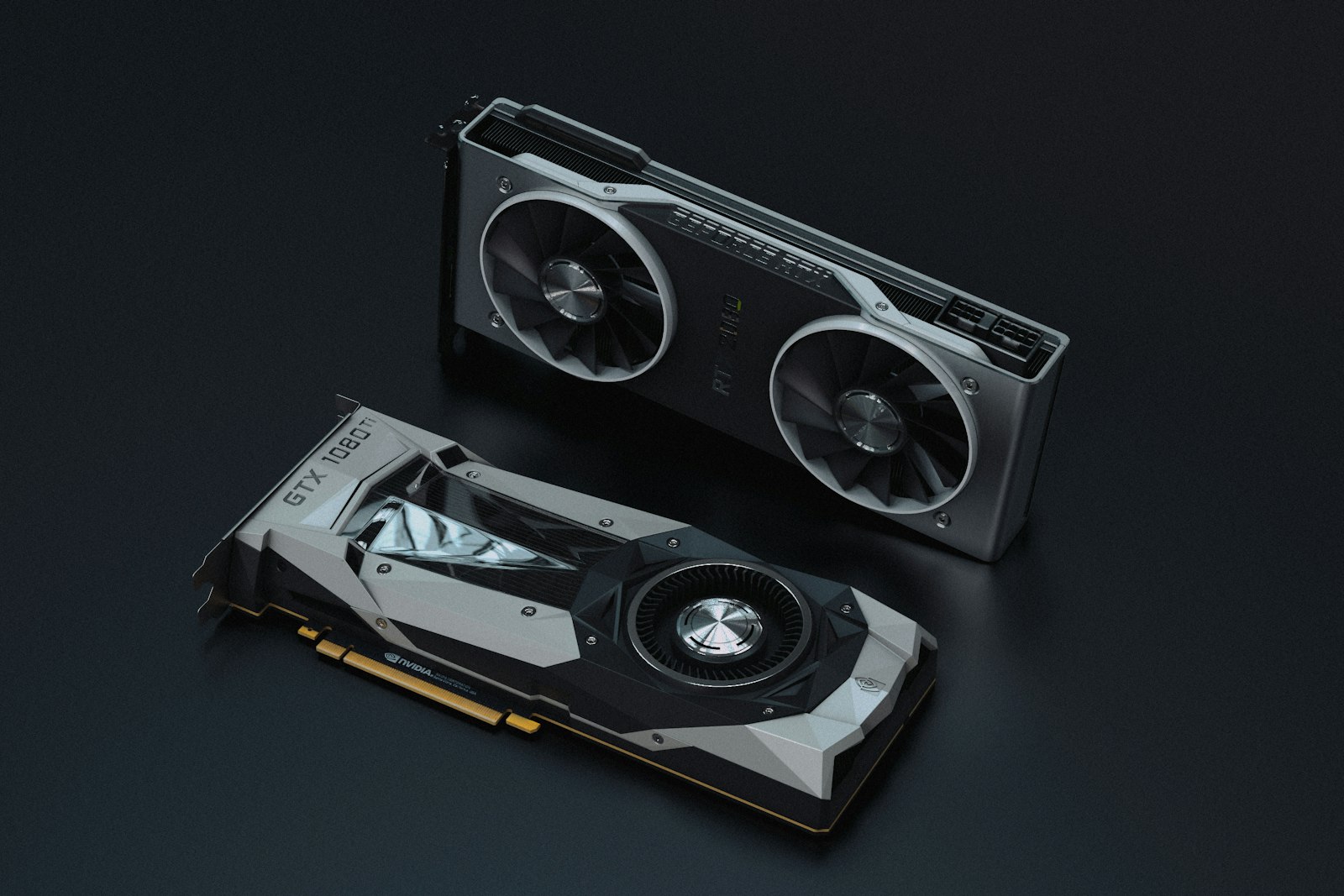
NVIDIA Shipped Nemotron 3 Ultra at Computex on June 1 — a 550B Mixture-of-Experts Open-Weights Model with Frontier-Class Agentic Planning, a 1M-Token Context Window, 5× Faster Inference, and 30% Lower Per-Task Cost. The Compute-Economics Problem That Has Constrained Enterprise Agentic AI Just Got Materially Less Constrained.
On June 1, 2026 at Computex, NVIDIA unveiled Nemotron 3 Ultra — a 550-billion-parameter mixture-of-experts model positioned as the company's largest open-weights release to date and a deliberate answer to the compute-economics problem that has kept long-running agentic workloads on a narrow set of premium-priced closed APIs. The model delivers frontier-class planning for multi-step coding, research, and enterprise workflows; 5× faster inference and up to 30% lower per-task cost than the comparable prior generation; a 1M-token context window that holds the entire codebase, document corpus, or multi-day work session in a single pass; and a deployment posture deliberately aimed at enterprise inference fleets, not at the chat-completion sidebar. On June 4, Aible shipped day-zero AibleClaw integration — governed long-running agents that plan with Nemotron 3 Ultra and post-train smaller Nemotron 3 Super and Nano variants on enterprise-specific use cases inside the customer's perimeter. The structural read isn't 'another open-weights model.' It's that the post-training, planning-tier, and cost-amortization math that an enterprise AI platform team has been solving in fragments — frontier planner here, smaller execution model there, distinct inference fleets, distinct eval harnesses — collapses into a single open-weights family running on the GPU substrate the enterprise already owns. Here's what changes about how agentic AI gets deployed when frontier-tier planning (not just coding) is available under open weights, on hardware the customer controls, with the smaller-model post-training loop sitting inside the same model family.
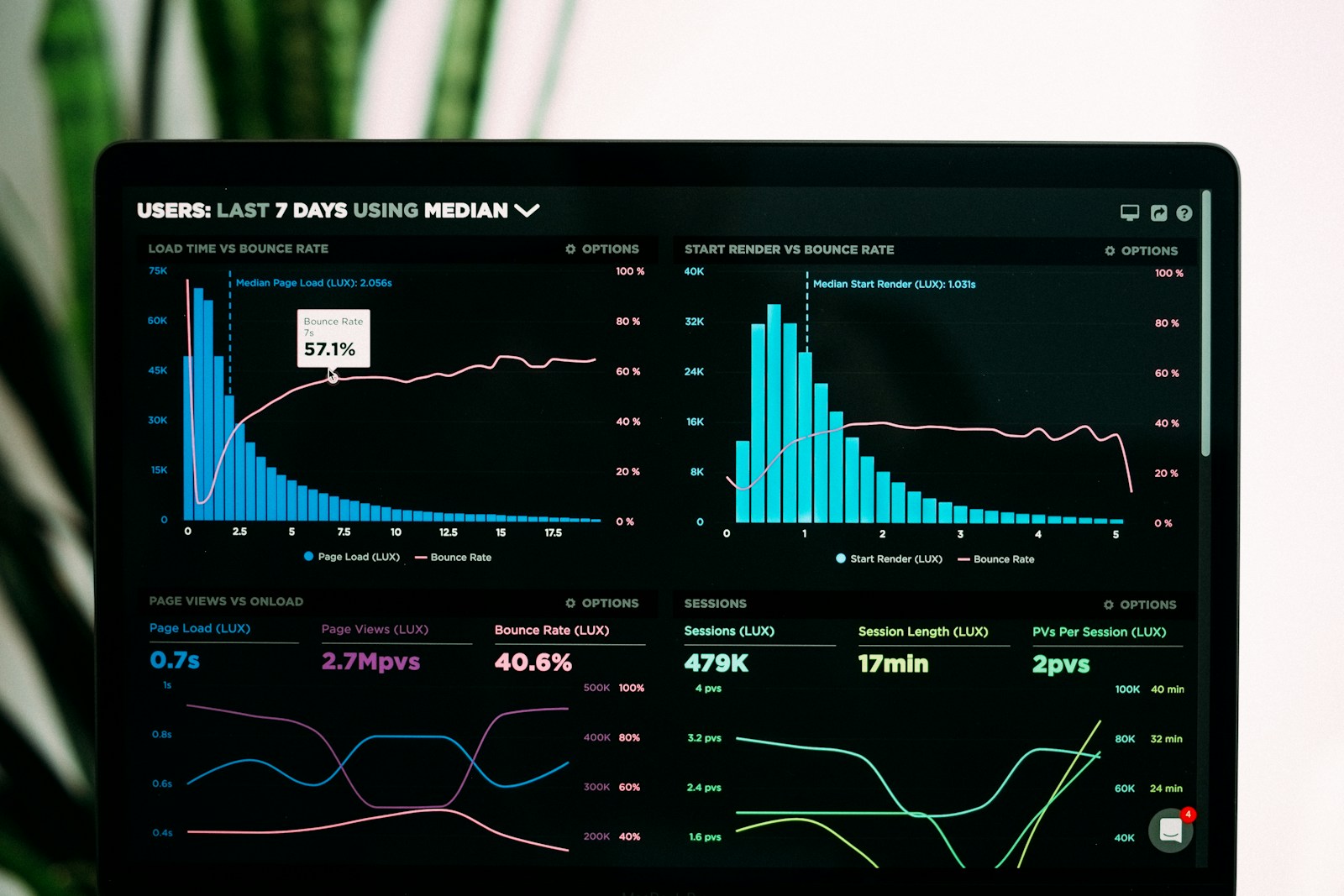
Agent Eval Tooling Matured in May 2026 — Phoenix v16 Shipped Sandboxed Code Evaluators, DeepEval v4 Added Decision-Graph Simulation, and the Eval Layer Stopped Being a Side Quest. The Discipline That Was Optional in Q1 Is Procurement-Mandatory in Q3, and the Rubric Author Just Became the Bottleneck.
On May 21, 2026 two of the most-deployed open-source AI evaluation frameworks shipped major releases on the same day. Phoenix v16.0.0 added sandboxed Code Evaluators that run model output as executable code inside isolated containers for composite scoring, plus LLM-jury implementations that let multiple judge models vote with weighted aggregation. DeepEval v4.0.3 added Decision Graph Logic for granular control over agent simulation paths, letting eval authors prescribe specific trajectory branches rather than relying on stochastic exploration. Together they round out a category that, twelve months ago, was a thin layer of scattered scripts maintained by individual ML engineers, and is now a standardized tooling stack — leaderboards, judge models, sandboxed grading, simulation graphs, automated regression gating — that procurement teams are starting to require evidence of before signing AI-vendor contracts. The structural read isn't "better eval libraries." It's that the engineering discipline behind grading AI systems just became reproducible enough, auditable enough, and tooling-supported enough that the next round of enterprise AI contracts will be evaluated on it, and the bottleneck has moved from "do we have the framework?" to "do we have the human judgment to author the rubrics the framework graders run?" Here's what changed in May, why the rubric-author seat just became the highest-leverage role on every serious AI team, and what to set up this quarter so the procurement conversation in Q4 doesn't catch your stack flat-footed.
OpenAI Hit General Availability on AWS Bedrock on June 1 — the First Time GPT-5.5, GPT-5.4, and Codex Have Shipped Outside Azure. The "Pick One Cloud and Get One Frontier Vendor" Architecture Era Is Over, and the Multi-Cloud AI Procurement Conversation Just Became Mandatory.
On June 1, 2026 AWS announced general availability for GPT-5.5, GPT-5.4, and Codex on Amazon Bedrock — the first time OpenAI's flagship models have been generally available on a non-Microsoft cloud since OpenAI's existence. Direct-to-OpenAI per-token pricing carries over with no AWS markup; the models route through Bedrock's Responses API; IAM, KMS encryption, and CloudTrail audit logging apply automatically; Codex moves from per-seat licensing to pay-per-token billing on the same platform that runs the rest of your enterprise data infrastructure. The April limited-preview turned into June GA in eight weeks, faster than the analyst expectation by roughly a quarter. The structural read isn't "another availability footnote." It's that the architectural assumption every enterprise AI strategy has been built on for thirty months — "if you want OpenAI capability, you put your AI workloads on Azure; if you want Claude, you go to AWS or run direct; if you want Gemini, you go to GCP" — collapsed on June 1, and the procurement decision that was settled for hundreds of Fortune 500 IT shops by their cloud-vendor relationship just reopened. Here's what changes about the multi-cloud AI strategy conversation when frontier vendor availability stops correlating with cloud-vendor lock-in, and why the architecture review you've been deferring on the AI side of your stack just stopped being deferrable.
MiniMax M3 Shipped on June 1 — the First Open-Weight Model That Combines Frontier Coding (59% on SWE-Bench Pro), a 1M-Token Context Window, and Native Multimodality, at 5–10% the Per-Token Cost of the Closed Frontier. The "Closed-Only at the Frontier" Era of Production AI Just Ended.
On June 1, 2026 MiniMax released M3, the first open-weights model to combine frontier-tier coding (59.0% on SWE-Bench Pro — edging GPT-5.5's 58.6% and Gemini 3.1 Pro's 54.2%), an honest 1M-token context window backed by its proprietary MiniMax Sparse Attention architecture (15.6× faster decoding and 9.7× faster prefill than M2 at million-token contexts), native multimodality across text, image, and video input, and a desktop-use capability that scores 83.5% on BrowseComp — beating Claude Opus 4.7 on autonomous browsing. API pricing landed at $0.60 per million input tokens and $2.40 per million output ($0.30 / $1.20 promotional on OpenRouter), with the weights themselves promised within ten days. The structural read isn't "another open-weight checkpoint." It's that for eighteen months the implicit assumption in every production AI architecture — "the frontier capability you need lives behind a closed API, owned by a US frontier lab, at $5–25 per million input tokens" — held without serious challenge, and on June 1 it stopped holding. The portfolio that production teams should be running in Q3 2026 now includes at least one open-weight model with frontier coding parity at one-tenth the per-token cost, and the procurement, routing, and self-hosting conversations that were deferrable last quarter are not deferrable next quarter. Here's what changes structurally about how AI features should be built, where the workloads should run, and which assumptions about model-vendor lock-in just expired.
Alibaba Shipped Qwen 3.7 Max on May 19 — a 1M-Context Agentic Coding Model That Beats Opus 4.6 on Terminal-Bench at Half the Price, With Qwen 3.7 Plus Released as Open Weights. The Sovereignty-and-On-Prem Conversation in Regulated Industries Just Stopped Being Theoretical.
On May 19, 2026, Alibaba's API went live with Qwen 3.7 Max — the new flagship of the Qwen family — and the company followed at the May 20 Hangzhou summit with Qwen 3.7 Plus as open weights under a commercial-friendly license. The headline numbers: 60.6 on SWE-Pro, 69.7 on Terminal-Bench 2.0 (ahead of Opus 4.6 Max at 65.4, DeepSeek-V4-Pro at 67.9, and Kimi K2.6 Thinking at 66.7), 92.4 on GPQA Diamond, a 1,000,000-token context window, and pricing at $2.50 / $7.50 per million tokens (input / output) — roughly half of Opus 4.7's rate card. Alibaba's internal testing reports a 35-hour autonomous coding run that fired 1,158 tool calls, though no independent reproduction had been published by May 25. The structural read isn't "another coding model shipped." It's that a Chinese-built, agentic-coding-grade model — competitive with the most capable Western flagships on the most production-relevant benchmark in the category — is now available both as a cheap API and as open weights you can run inside your own perimeter. The on-prem and sovereignty conversation that's been theoretical in regulated industries for two years just became a procurement decision with a real default option. Here's what that does to the routing portfolio, the eval matrix, and the build-vs-buy calculation when sovereignty stops being a $50M custom build and starts being a Tuesday-afternoon procurement add-on.